The Constitution isn’t optional.
Unless it’s the Trump Administration, apparently.
The First Amendment of the United States Constitution protects five rights: religious liberty, free speech, press freedom, peaceful assembly, and the right to petition government. We learn this in grade school, and so did our parents, grandparents, and all of the generations before us since 1781–the time of its ratification.
The Constitution is known as the supreme law of the land, and it establishes the framework for the government, protects individual rights, and ensures a system of checks and balances across the three branches of government.
That is what my little sister’s government homework says, anyway.
Every day, our freedoms are protected by this document, criminals are prosecuted with this document, and the government runs based on it.
Or at least, it used to.
It’s not that we don’t have rights in America. After all, it is the greatest country in the world, right?
We have the freedom of religion. It favors Christianity, of course, which comprises the wavering majority of Congress. The separation of the Church and the State is objective, too, until it comes to women’s rights or the shooting of Charlie Kirk.
People can always start a petition–even if, historically, only 2% of those have resulted in political action.
Speech is pretty much a given, too–as long as it doesn’t get published.
The freedom of the press is a freedom pressing extinction.
On paper, the First Amendment says that the government cannot control the press, what it says, or what it may publish. In practice, under the Trump administration, each of these so‑called guarantees comes with an asterisk.
Let’s look at what the freedom of the press looks like to those in power.
Trump, himself, has excluded news outlets from the White House and has repeatedly threatened to sue over critical news. Access bans and lawsuits have had an impact on Wall Street Journal, CBS, ABC News, The New York Times, and CNN–all major media outlets in our nation–while favoring less critical organizations.
After filming a protest against Immigration and Customs Enforcement (ICE) at Cities Church in St. Paul, MN., CNN Journalist Don Lemon and Emmy Award Winning Journalist Georgia Fort face civil rights and conspiracy charges for the same reporting they’ve done for decades.
Both were arrested by federal officers. Fort was taken from her home at just 5:30 a.m. in the morning, with her family and children fearfully watching inside.
Now, Trump is threatening to sue comedian Trevor Noah for a joke made at the Grammys.
As these events ring in the new year, some might start to wonder whether the adage New Year-New Me has been changed to New Year-New Press, New Year-New Rights (or lack thereof), New Year–New Gestapo?
But this is not a 2026 problem. It started months ago.
Last September, ABC Television Host Jimmy Kimmel was indefinitely suspended after a controversial comment on his personal X account against right-wing political activist Charlie Kirk.
We just didn’t view Kimmel’s career as a foreshadow to the First Amendment being optional.
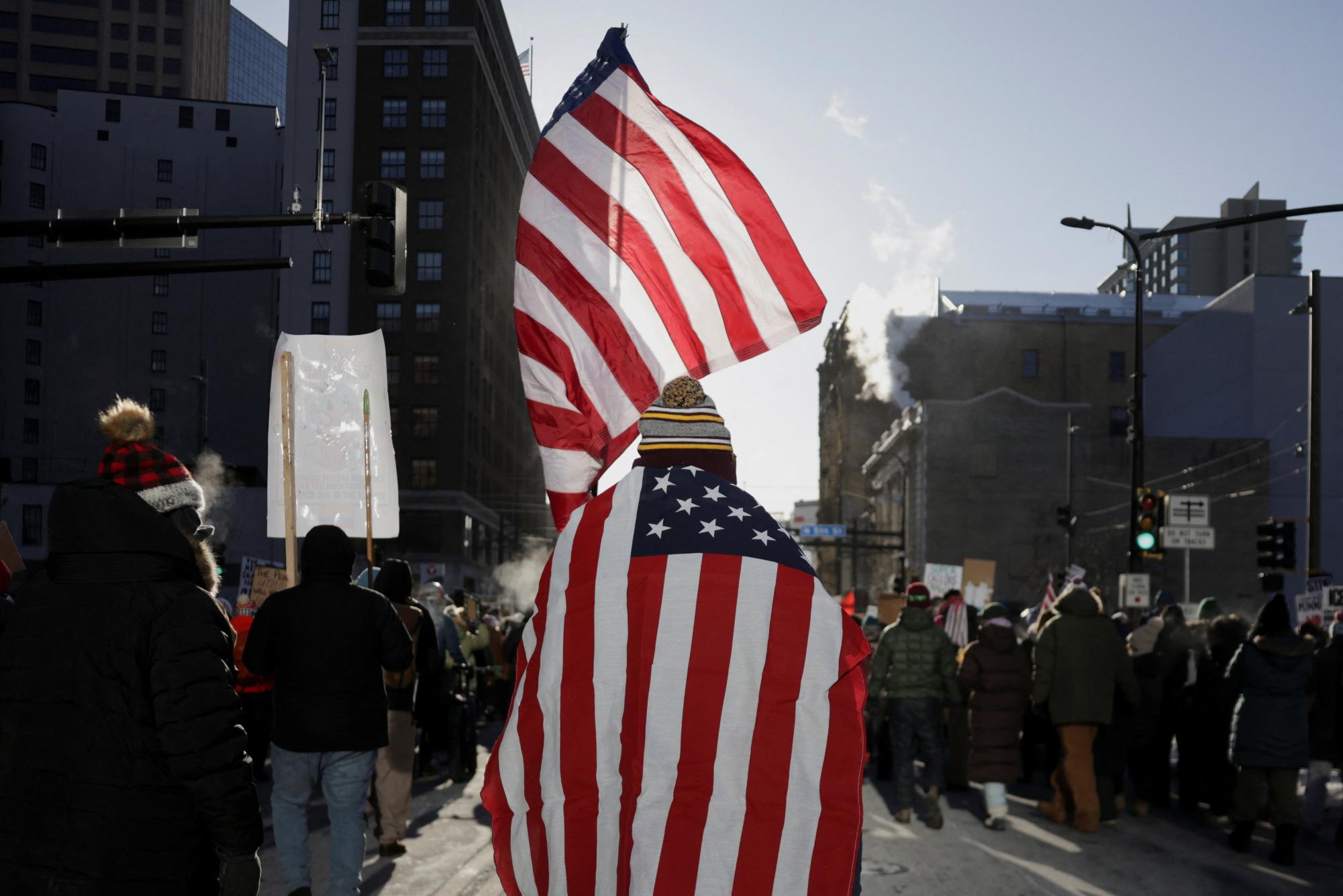
And while press freedom fades fast, our final right under the First Amendment–assembly–turns dark with it.
The right to peacefully assemble protects peaceful protest and non-violent gatherings.
The people are peaceful; the government is not.
Projectiles, tear has, and lethal force have been seen at protests in Los Angeles, Minneapolis, and Chicago, and Trump advised DHS not to aid democratic cities unless explicitly requested.
And maybe that’s the new meaning of “constitutional”–optional and biased, depending on the party in power.
We live in a nation ordered by fear and finances. To disagree is to become a convicted criminal, and to speak out is to become a martyr of rights in these unprecedented times.
However, the Constitution is only as strong as our willingness to defend it.