-
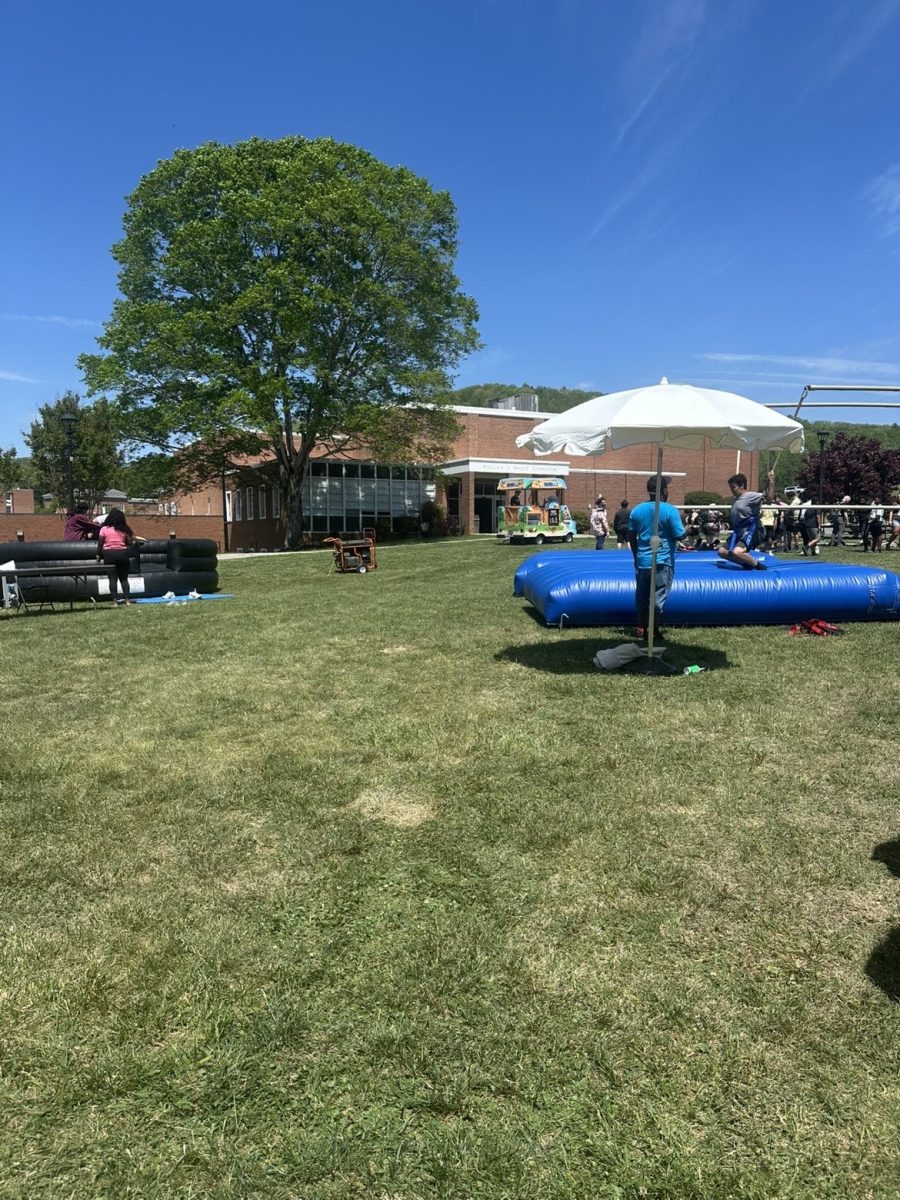
Trucks from Servpro park just outside Moore Hall to begin the clean-up process from the flood.

-
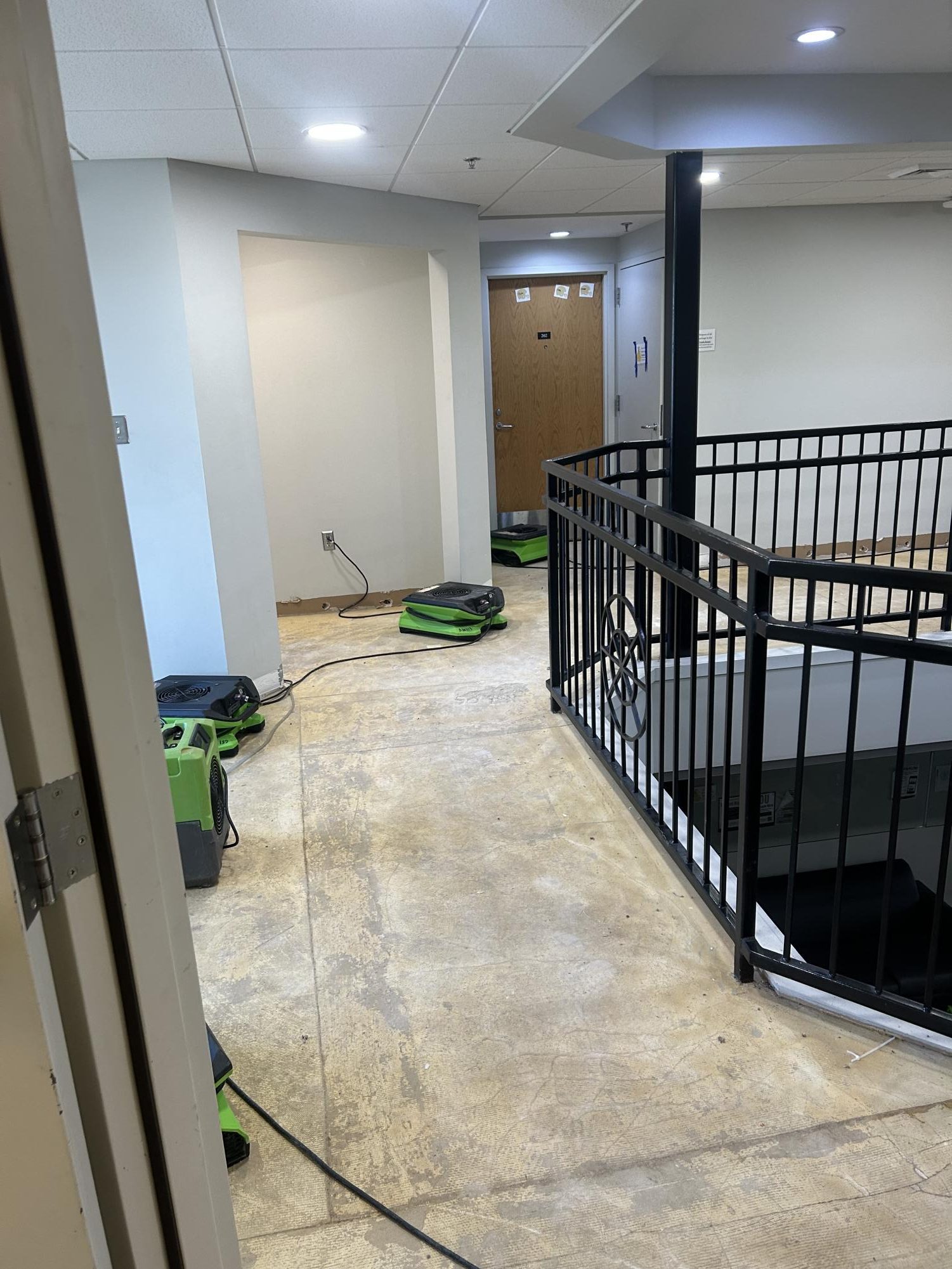
Industrial blowers work inside Moore Hall to rid the dorm of water and to quell mold growth.

-
Piles of debris collect on the porch as damaged pieces of Moore Hall are gutted and brought out to be discarded.


A chilly afternoon is suddenly cut by a groaning sound, and then a loud bang resonates through Moore Hall. Waters gush forth from a burst sprinkler pipe and begin to fill the second floor of the building, cascading down onto the first level. Students are evacuated as the sound of a fire alarm, and the burning scent of shorting electronics, fills the building.
Outside, and confused by the transpiring event, students watch helplessly as their belongings become more and more saturated.
“The flooding was very shocking and surprising, especially because it seemed to have come out of nowhere,” comments Junior Owens, a sophomore living in the building.
The students, trapped outside while water gushes from the light fixtures onto the floor, can only watch as the carpeting in the dorm become massive sponges.
They wonder exactly what is happening and where they are going to sleep?
Then their answer comes. Moore Hall will sit empty for the rest of the semester, and students will be moved to Chapman Hall.
“The move to Chapman has been understandable, but it still makes me very unhappy, especially since my room was not affected by the flooding,” says Owens.
The stream of students relocating from Moore aren’t the only ones feeling the effects of this event. Residents of Chapman feel the effects as well.
“It’s a lot different than what I have gotten used to here,” says Noah Harris, a senior and resident of Chapman. “From 10 people to two whole floors is a pretty big change.”
This big change has been affecting the small aspects of residents’ daily life.
“Making sure that I can get a parking space or having to do laundry at odd hours to have a washer and dryer open is definitely a new situation for this building,” says Harris.
Meanwhile ,for the former tenants of Moore, it has seeped into the well-being of their mental states.
“The after-effects have also caused a lot of stress and uncertainty,” says Owens. “With all of the variables that aren’t fully accounted for like when I’ll be able to move back in or even just get in the building to get all of my belongings.”
This event has acted as a siphon on the energy of those who live in the building, as their lives didn’t stop just because the water started.
“The flooding that happened in Moore was an incredibly frustrating and emotionally exhausting event,” says Ashli Wuss, a senior. “After a long weekend in Georgia for a soccer game, I was just incredibly exhausted by the whole ordeal afterwards.”
Exhaustion wasn’t the only feeling that trickled its way into residents’ minds; uncertainty was like a second flood for the residents.
“I was also worried about my teammates and where we were going to stay while it was getting fixed,” says Wuss. “I just wanted answers and wanted to know exactly what is going to be happening.”
This constant flux of unknown has left residents like Wuss wiped out and dredging for more information on what’s to come.
“This whole experience for me was emotionally draining,” she says. “Especially because we were in our last week of regular season play. I just hope there will be answers and results once everything gets situated.”
For some, the situation felt disconnected from reality as they were washed out of the lifestyle they had become accustomed to.
“Walking into Moore to see water pouring from the ceiling didn’t even feel real,” says Jadyn Patton, senior. “We were all comfortable and at home in our apartments, so it’s been difficult to adjust to new spaces.”
Being separated from comrades who used to always be within arm’s length is another factor that has stirred up the lives of the former Moore residents.
“I miss living close to my friends, but we are all hopeful that this is just temporary,” says Patton.
Residents were completely caught off guard by the flood, much like a ship at sea when hit by a sudden storm. When they saw water filling the floors, their minds were as choppy as waves during a hurricane.
“Moore hall flooding was completely unexpected and brought a lot of stress with it,” says Allyson Tubbs, junior. “Everything felt chaotic as we tried to figure out where to go, and the uncertainty of what comes next has been overwhelming.”
Some of the tenants have been taken completely aback by the events, unsure of how they are going to approach the new living situation.
“At first, I wanted to move home just because of the initial shock and stress of what was going on,” says Anna Milliron, senior. “I knew Chapmen was not the nicest building, but I am thankful the college had somewhere to put us.”
With consideration of the several other factors involved, Milliron remained anchored at Ferrum.
“I ultimately decided to stay on campus due to living an hour away and wanting to save money towards gas,” she says. “For now, I’m staying in Chapman, and it definitely takes some getting used to, but it has not been bad.”
On top of the shock of the flood, the students have had to deal with being limited on help in removing all of their belongings on a clock.
“There were people from the college present that were directing us on who can enter the building and who can’t,” comments Milliron. “They let us go in room by room to get our stuff, but no one from the college helped to get our stuff out. Some RA’s helped and students who lived in Moore helped each other, but people from the college mainly just directed who can go in at one time.”
The hectic nature of the event put a massive strain on the mindfulness of the residents, drowning them in chaos.
“My room specifically didn’t have any water damage, but my boyfriend’s room did,” says Milliron. “My boyfriend wasn’t on campus at the time; he was at home over 3 hours away.
Milliron says her main concern was trying to get his belongings out so his belongings wouldn’t be damaged.
“This was extremely stressful trying to get his stuff and mine out in a timely manner,” she says. “I was thankful to have some help from teammates and some RA’s present, but I mainly did it on my own. The unknown of where I would go was also extremely stressful! I know it was just an extremely stressful time for everyone involved.”
Nonetheless, hope buoys itself above the flood waters for those who have been displaced and stranded by the rushing waters.
“Still, I believe everything happens for a reason, and I’m optimistic that things will only get better from here,” says Tubbs.
While dregs of uncertainty still remain, Jill Adams, the dean of students, has already laid claim to when the building may be livable again.
“We are expecting Moore Hall to be open for the spring semester,” says Adams.
She has also stated that students will be credited for the fact that Moore is more expensive than Chapman to live in. The school has also stated that students who do not have renters insurance will not have damages covered by the school, as stated in the housing agreement signed by all students.
There are currently no estimates for the cost of damages.